
Adventure cruise: Journey to the Subantarctic Islands with Heritage Expeditions
The untamed beauty of Subantarctic Islands has long been understated. A small ship cruise with Heritage Expeditions reveals remote lands full of wonder and wildlife
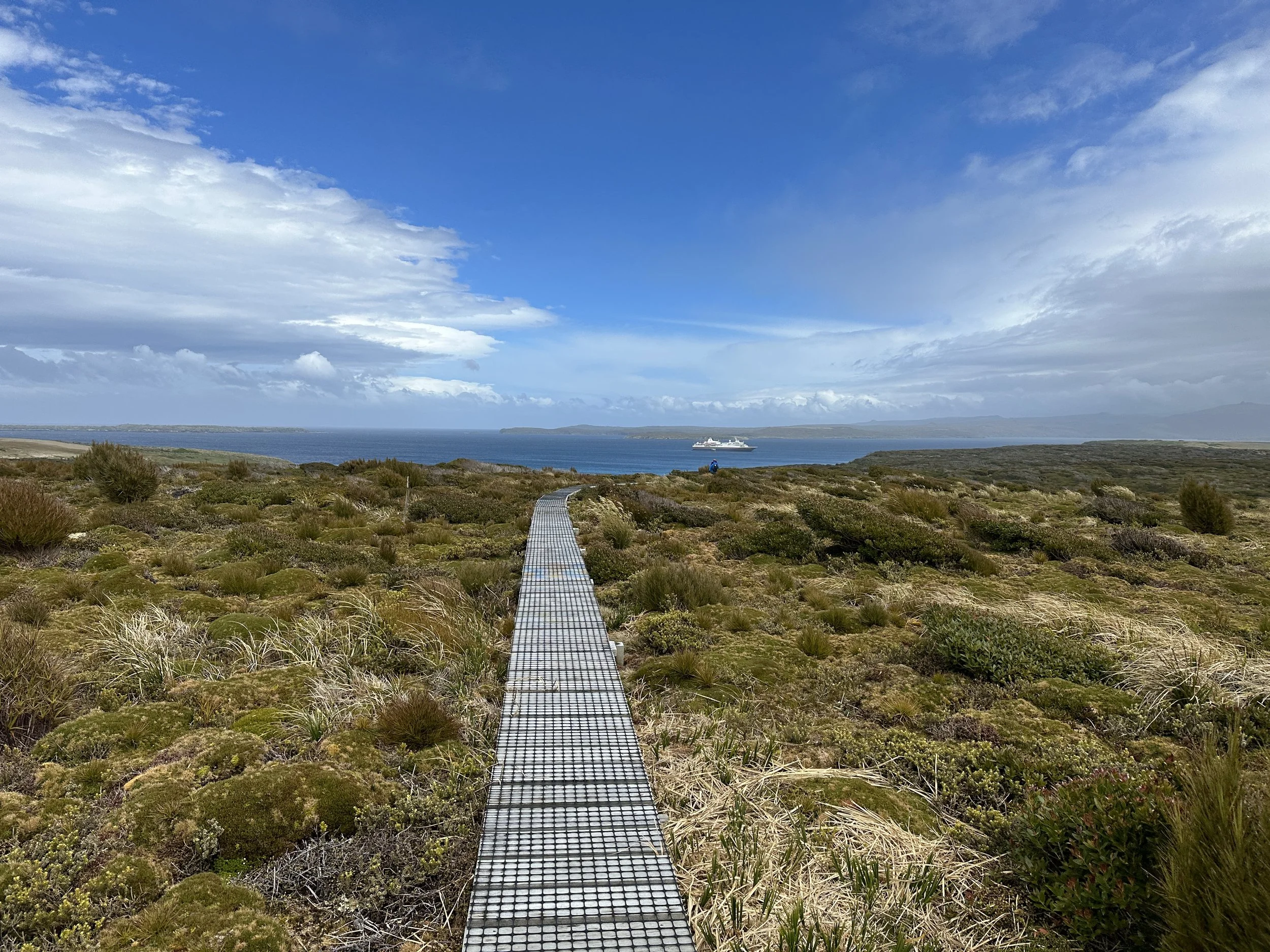
Enderby Island board walk in New Zealand’s Subantarctic Islands (image by Jacqui Gibson).
I stand in silence watching the outstretched wings of a distant seabird tilt this way and that on the horizon. Its form – two long black lines either side of a shapely white torso – is crisp against the day’s heavy sky.
Suddenly it dips below the skyline to take a run at the ebony peaks of the Southern Ocean, suggesting another more urgent story.
The Antipodean albatross is one of the world’s most endangered seabirds. I’m eyeing its theatrics from the stern of a 140-passenger cruise ship called the Heritage Adventurer on a 16-day expedition to Australia and New Zealand’s Subantarctic Islands.
At these southerly latitudes, I’m warned, gales can whip up to 200 kilometres an hour. Waves can swell to heights of 10 metres. Thankfully, for me, there are few such extremes at this time of year.
Throughout the seasons, this seemingly inhospitable place is home to spectacular ocean wildlife from rare and endemic seabirds to pinnipeds such as fur seals to whales, dolphins and many of the world’s penguin species.
“To me, this is one of the last truly remote wilderness regions on the planet,” New Zealand expedition leader Aaron Russ tells me, looking out the dining room window to a frothing sea.
Co-owner of Heritage Expeditions, a family-run expedition cruise company based in Christchurch, Russ travels to New Zealand’s Subantarctic Islands every summer — something he first did, aged five, with his conservationist parents and company founders, Rodney and Shirley Russ.
“I think of these offshore islands as New Zealand’s iconic landscape. The environments — and the flora and fauna they host — are as unique and special to our country as the Outback is to Australia and the Grand Canyon is to the US. To me, every New Zealander should come here at least once in their lives.”
For some, the Subpolar outposts are what they might see in passing on a cruise ship voyage to Antarctica. Every year, the frozen continent opens to throngs of tourists enticed by its gleaming white icebergs and photogenic marine life.
In contrast, I’ve opted to start my summer by travelling to the lesser known group of Subantarctic Islands off the southern coasts of Australia and New Zealand just above Antarctica.
Departing from the New Zealand port of Bluff, the ship stops at the Snares, then Enderby Island in the Auckland Islands. Australia’s only Subantarctic territory, Macquarie Island, the southernmost point on the voyage, follows. Then we track north to Campbell, Antipodes and Bounty Islands.
Finally, we take a side trip to the populated Chatham Islands (not strictly part of the Subantarctics), off New Zealand’s east coast, before returning to the mainland dock where the expedition began.
I’m here in search of the wildlife that has made the caves, thickets, cliff ledges and surrounding waters of these wind-bitten islands home.
For many, their fate is hitched to these island niches: rugged black shorelines fringed in swishing leis of golden kelp, mattress-soft tussock grasses and precipitous fogged-in rock mantles. These nooks are as homely to families of penguins, albatross and mollymawks as any suburban lounge is to a human one.
The Journey Centuries in the Making
Historically, people have travelled to Australia and New Zealand’s Subantarctic Islands for centuries. Archeological evidence shows Polynesians visited Enderby Island as far back as the 1300s. Later came European explorers, sealers, whalers, shipwreck survivors and even settlers. Needing food and, at times, earnings from the global oil and blubber industries to survive, those early visitors nearly wiped out all wildlife.
In the late 1990s, the islands and their inhabitants were finally granted UNESCO World Heritage protection, with subsequent government-led pest eradication efforts boosting survival rates further.
Today, visitors need a permit and must undergo rigorous biosecurity measures to go ashore. On some islands, land access is totally restricted. The result is previously endangered species like fur seals, elephant seals and king penguins are coming back. Others, including many resident seabirds, need more intervention.
“Of the more than 400 seabird species in the world, almost half have declining populations. A third are globally threatened,” British seabird specialist, guide and expedition keynote Peter Harrison explains as we line up to disembark the ship on rubber Zodiacs.
It’s day six of the voyage. We’ve seen orcas passing the ship earlier this morning. Now we’re off to Macquarie Island, the breeding ground of king and royal penguins.
Landing at Sandy Bay, curious kings in glossy silver coats and neck feathers dabbed in yellow beeline towards us. I stick about to enjoy their attention then pick my way between napping seal pups to a wooden boardwalk leading to the island’s royal penguin colony.
At the lookout, thousands of white-bellied penguin dads with spiky orange comb-overs straddle nests. Between their pink webbed feet are tiny fluffy orbs, their precious newborns, hungry for mum’s return.
That kind of experience, says Harrison, as we return to the shore, is the point of expedition travel.
I thought as much in those moments and in the days before on Enderby Island — like when I stood under a forest canopy of just-flowering southern rata, listening to the warble and fizz of tuī and bellbird, a tangled carpet of megafauna at my feet.
The Rise of Expedition Cruising
In 2023, an industry report published by the Cruise Lines International Association shows the popularity of expedition cruising is on the rise, with the number of expedition passengers 70 percent higher in 2022 than it was in 2016. Travellers, the report says, want immersive, responsible, bucket list experiences.
Ecologist and guide Dan Brown tells me that’s exactly what Heritage Expeditions voyages are designed to deliver.
“We select destinations rich in both human and natural heritage; very often places where the wildlife fights for survival. It’s the Russ family’s view that travel to such areas, done responsibly, can shine a spotlight on conservation issues and rally people to do what they can to help out.”
Brown and I are hiking atop Campbell Island – pest free since the early 2000s – in wind gusts that nearly blow me off my feet. The gales are so strong we have to shout to hear each other above the din. Earlier, a pugnacious sea lion chased us up the hill. Yet, up here amongst the breeze-buffeted tussock, nesting pairs of southern royal albatrosses seem oblivious to the drama surrounding them.
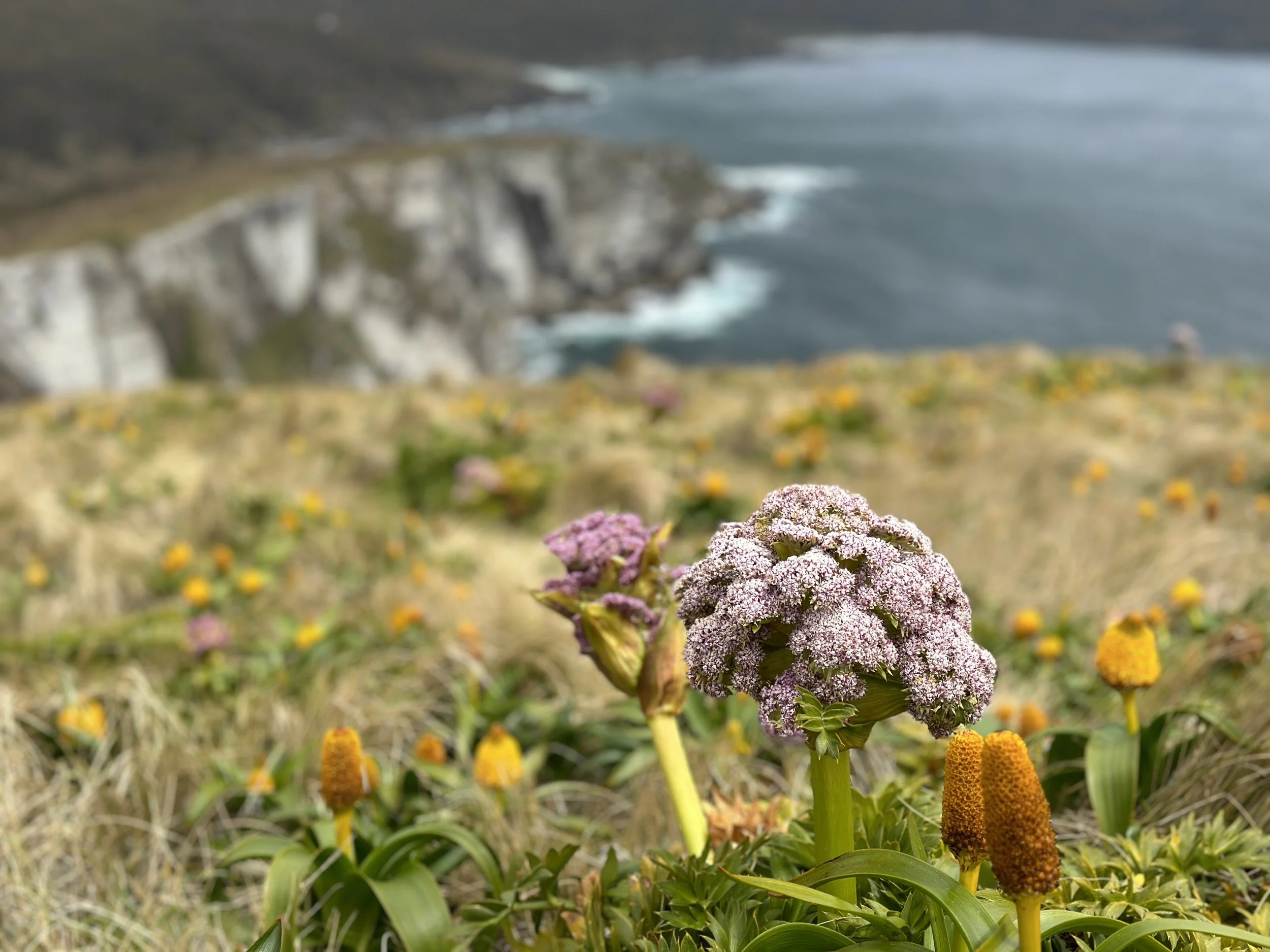
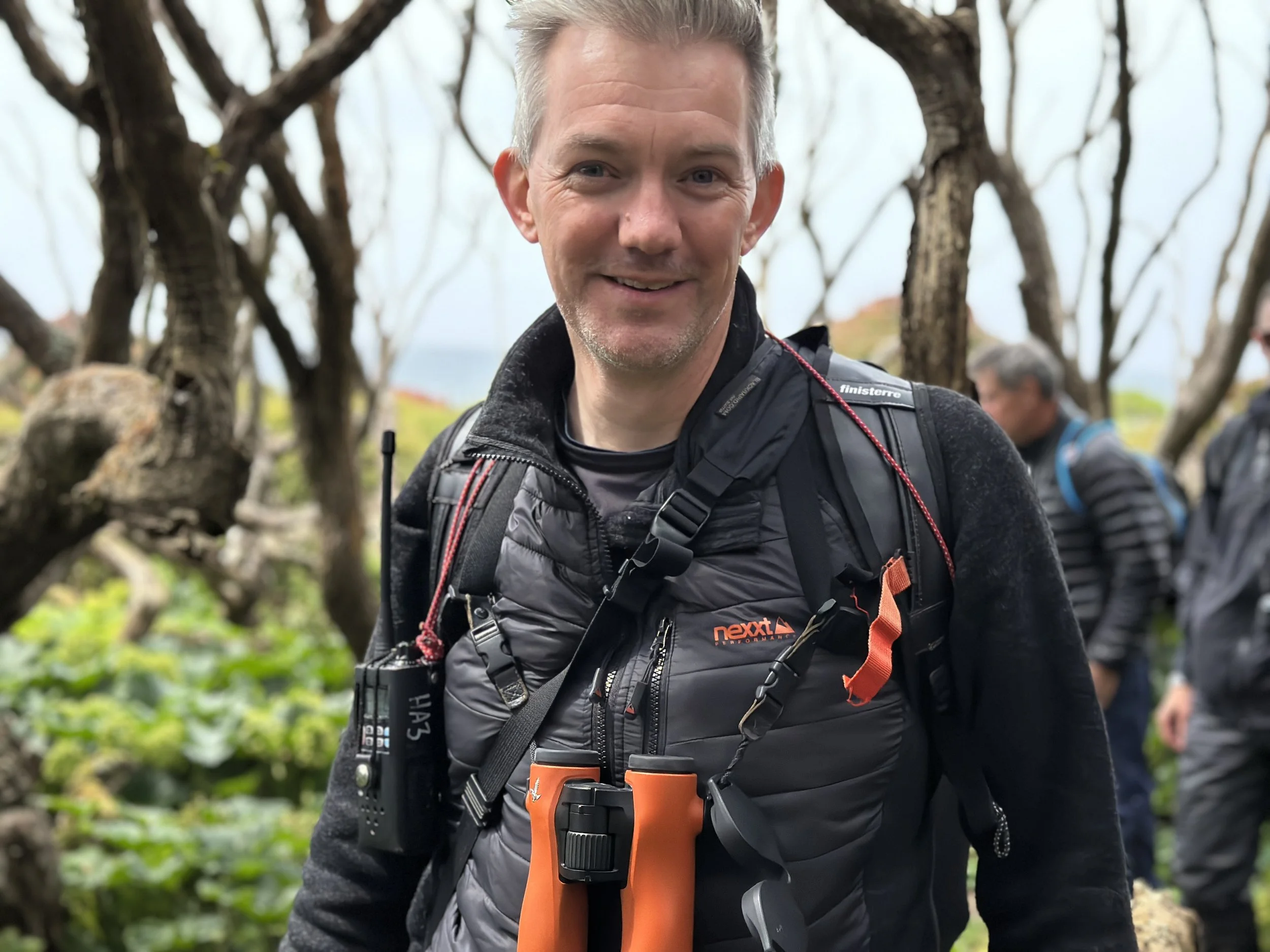
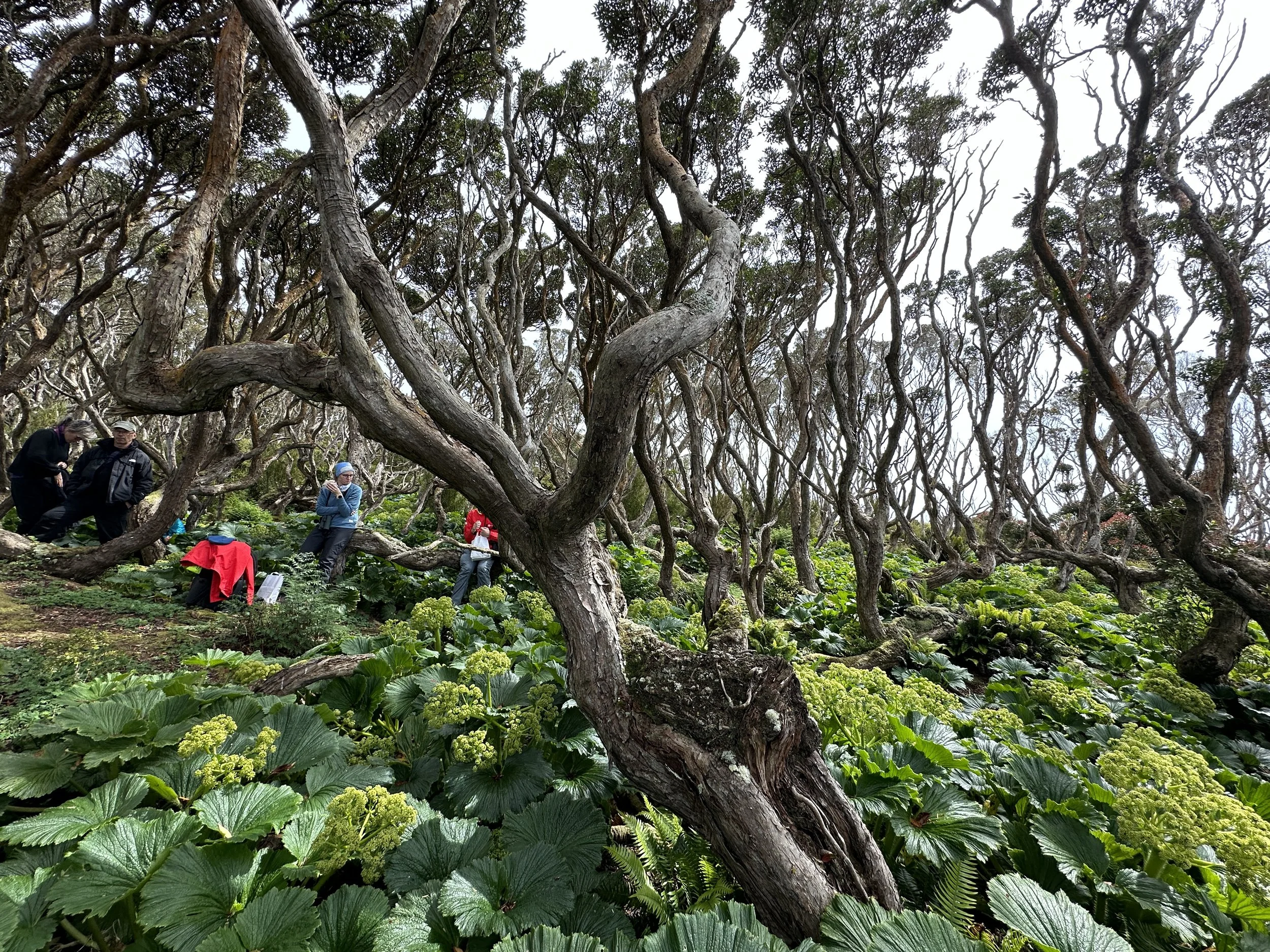
We watch the enormous seabirds from a distance, but close enough to admire their courtship display: extended wings; sharp calls; and pale pink beaks pointed at the sky. Crouching low to be heard against the wild weather, he tells me he first came to Campbell Island in 2008 as a Heritage Expeditions scholar.
Every year, a dozen or so handpicked scholars are invited to join Heritage Expeditions on a Subantarctic cruise in the hope they might become lifelong advocates for the region.
“That scholarship had a huge impact on me,” says Brown who’s worked as an ecology consultant and wildlife guide ever since. It helped set the course of my career and it’s given me the opportunity to bring others to this very special part of the world.”
Around midnight, in a few days’ time, I’ll be summoned on deck to see the greeny-yellow hues of the Aurora Australis (the Southern Lights) illuminate a purple sky. Later on, I’ll see pilot whales surfacing and scan the granite shores of Bounty Island for the critically endangered black robin, a tiny forest bird recently brought back from the brink.
On the Chathams, I’ll meet an ingenious couple, Bruce and Liz Tuanui, on a mission to help save the islands’ endemic magenta petrel by creating a breeding sanctuary within a predator proof fence.
These encounters will provide more thrilling proof that wildlife is holding on — and sometimes even flourishing — on these extraordinary but little known islands.
What to expect
The Birding Down Under tour is Heritage Expedition’s most comprehensive exploration of the Subantarctic Islands.
It is particularly suited to birders — 10 of the world’s albatrosses breed in the region; five in the Subantarctics and nowhere else — but also ideal for travellers interested in history, ecology, botany, geology and nature photography. Knowledgeable naturalists, biologists and ornithologists take guests on excursions and provide daily talks.
Travel aboard the 124-metre long Heritage Adventurer built in Finland in 1991 specifically for polar exploration (it comes with a fleet of 12 Zodiacs). Sip evening cocktails at the bar. Dine in the main dining room or the smaller, more relaxed bistro. On board is a lecture theatre, library, pool, spa, sauna and gym.
Find out more, at: heritage-expeditions.com
The writer travelled to the Subantarctic Islands courtesy of Heritage Expeditions.
This story was published in the annual 2024 ‘cruise special’ of MiNDFOOD magazine. Meanwhile, the Subantarctics was included by Jacqui Gibson in Condé Nast Traveler’s The 25 Best Places to Go in 2025.